
Material selection
Recycled PS Pellets vs Expandable EPS Beads: Which Material Does Your Process Need?
Compare recycled PS pellets and expandable EPS beads by processing route, application and sample requirements before choosing material for your factory.
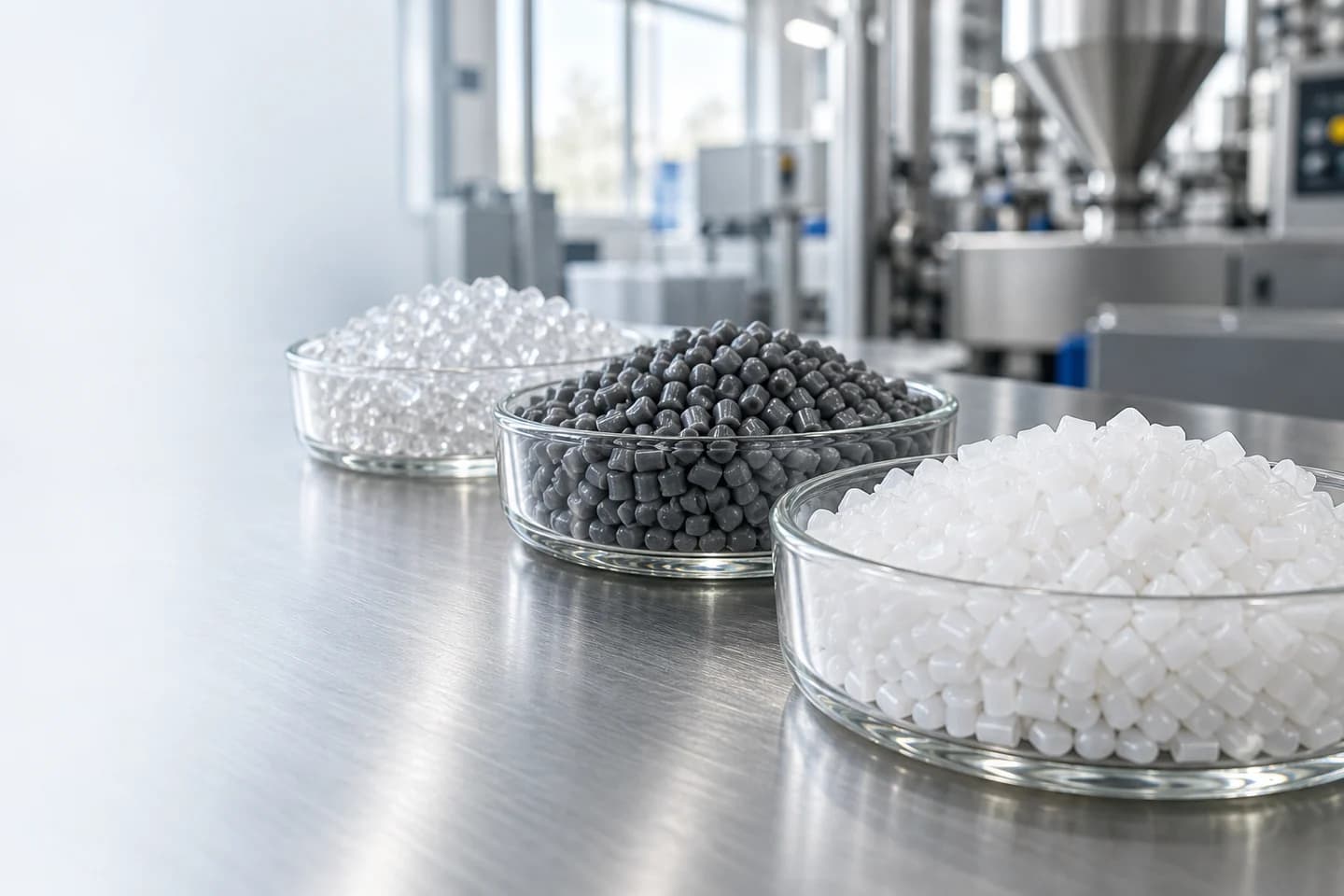
Illustration of different pellet appearances; appearance alone does not establish expandability.
Introduction
Recycled polystyrene pellets and expandable EPS beads belong to the polystyrene family, but they are not interchangeable feedstocks. Conventional recycled PS pellets are normally melted for extrusion, injection moulding or compounding. Expandable EPS beads are designed for a bead-expansion and moulding route. Before comparing prices, identify the processing equipment and the finished product you intend to make.
This distinction matters because suppliers sometimes use “EPS pellets,” “EPS granules” and “recycled polystyrene” differently. One quotation may describe dense pellets recovered from used foam. Another may describe an expandable bead grade. A photograph of white granules does not resolve the difference.
For an importer, distributor or industrial buyer, the practical question is therefore more precise than “Do you supply recycled EPS?” Ask: “Is this a dense recycled PS extrusion feedstock, an expandable bead grade, or already expanded foam material?” That question can prevent an unsuitable sample, a failed production trial and a container that cannot run on the buyer’s equipment.
The following guide explains the terminology, maps material choices to common applications and provides a practical specification brief for discussing customer requirements with a supplier.
What Is the Difference Between PS, EPS and HIPS?
PS is the polymer family
Polystyrene, abbreviated PS, is a thermoplastic used in several material forms. A material description should tell the buyer both what the polymer is and how the supplied grade is intended to be processed. “Polystyrene” alone is too broad to define an industrial purchase.
General-purpose polystyrene and high-impact polystyrene are familiar examples. INEOS Styrolution distinguishes its GPPS range through properties including transparency and stiffness, while describing toughness among the characteristics of its HIPS range. These are material-family descriptions, not guarantees for an unidentified recycled batch. Source: INEOS Styrolution, Polystyrene.
Expanded and expandable describe different stages
“Expanded polystyrene” usually describes the lightweight cellular foam product. “Expandable polystyrene” describes a feedstock prepared for expansion. The British Plastics Federation’s EPS Group identifies pentane as a blowing agent used in EPS manufacture. A buyer still needs the selected grade’s current technical and safety documentation to establish its handling and processing requirements. Source: BPF EPS Group, Composition.
Already expanded foam particles are a third category. Their appearance, bulk density and function differ from dense recycled pellets and unexpanded bead feedstock. Do not accept an order description that leaves these stages ambiguous.
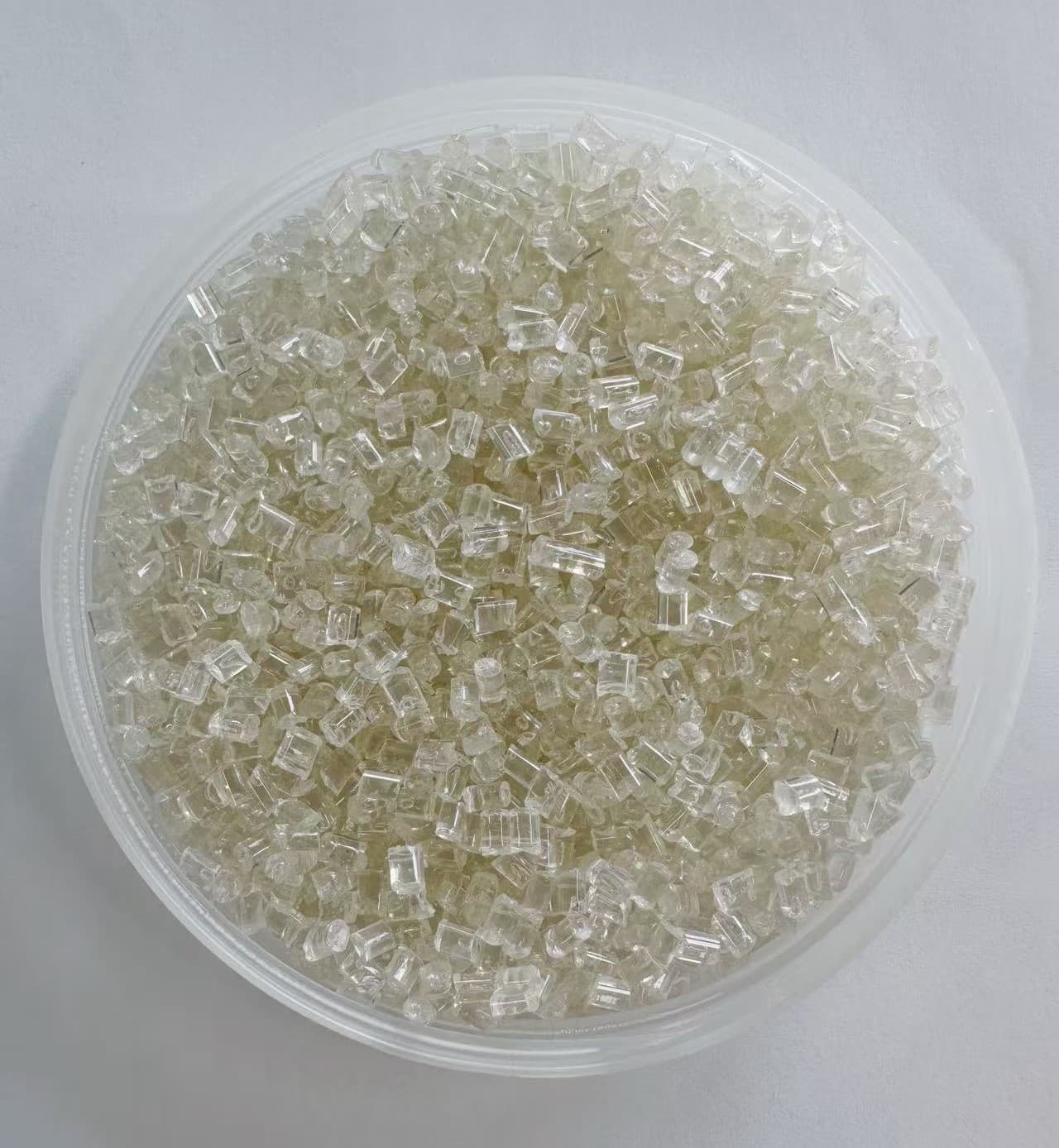
Recycled EPS can become dense PS feedstock
The origin of a recycled material does not necessarily describe its next processing route. Foam packaging can be recycled into material intended for melt processing. The BPF EPS Group describes granulation, blending and extrusion in its account of EPS recycling. Source: BPF EPS Group, Recycling Practicalities.
Consequently, pellets described as “recycled EPS” may refer to their recovered feedstock origin rather than an ability to expand in a steam moulding system. Ask the supplier to state the supplied material form and intended process explicitly.
Which Feedstock Matches Your Production Equipment?
Start with the machine, then narrow the material family. A production route is a better first filter than pellet colour, price or a general recycling claim.
| Production route | Material category to investigate | Main confirmation before sampling |
|---|---|---|
| PS profile extrusion | A suitable dense recycled PS grade | Flow behaviour, formulation compatibility and finished-profile requirements |
| Injection-moulded industrial components | A suitable recycled PS or HIPS grade | Filling, toughness, dimensional stability and appearance |
| EPS bead expansion and shape moulding | A compatible expandable bead grade | Bead specification, expansion guidance and moulding suitability |
| Existing foam-particle filling or blending operation | The specific expanded-particle feedstock required | Particle form, size, density and process compatibility |
The table is a screening tool, not a recipe. A specialised foamed extrusion line may use dense PS feedstock together with its own foaming system. That does not make the feedstock equivalent to an expandable bead grade. The equipment supplier and material supplier should agree which route is being discussed.
When sending an inquiry, include a machine photo or model, a short process description and a finished-product photo. These details often communicate more clearly than a translated product name.
Selecting Material for Decorative PS Profiles
For skirting boards, wall panels and picture-frame mouldings, the relevant questions usually concern the complete extrusion and finishing process. A decorative surface can conceal the base colour, but it cannot correct every dimensional or mechanical problem underneath it.
Define the part that will actually be sold
Describe the profile’s cross-section, wall thickness, finishing method and expected handling. A frame profile cut into mitred corners has different practical requirements from a broad wall panel supported over most of its surface. A useful product application brief also identifies whether the material forms the whole profile, a core or a layer in a multi-material construction.
Specify appearance on a finished sample. “White,” “natural” and “dark” are not sufficiently precise acceptance criteria when surface quality matters. Agree a reference profile, viewing conditions and the defects that would lead to rejection.
Include cutting and installation preparation
A profile that looks satisfactory at the extrusion line may chip during cutting, split near a fastening point or mark during packing. Include the buyer’s normal cutting tools, joining method and installation preparation in the trial plan.
For a skirting-board application, for example, cut representative lengths, inspect the edge, assemble a corner and check the decorated surface after routine handling. This is a suggested evaluation sequence, not a claim that a particular Cherein grade has already passed those tests.
For a more detailed extrusion checklist, see Cherein’s PS profile material-selection guide.
When Should a Buyer Consider Recycled HIPS?
Investigate HIPS where the finished component needs a balance that includes toughness. The word “high-impact” should prompt a technical discussion, not replace it. Part geometry, processing history and the actual formulation influence whether a recycled grade meets the application.
Ask which mechanical property is being reported, how the specimen was prepared and which method was used. An impact number without units, specimen details or a test method is not a purchase specification. The same caution applies when comparing different suppliers’ data sheets.
Consider a hypothetical industrial casing with thin screw bosses. It may fill successfully during a sample run yet fail when assembled. The relevant approval exercise includes fastening, fit and repeated handling where those actions reflect actual service. A pellet-only inspection would miss that question.
HIPS also needs an appearance review. Buyers should assess colour and surface requirements on moulded or extruded parts rather than assume that a white recycled pellet will reproduce an existing colour standard without adjustment.
Review the White Recycled HIPS product page as a starting point for a grade discussion, then request current documentation for the proposed supply.
Selecting Expandable Beads for Moulded EPS Products
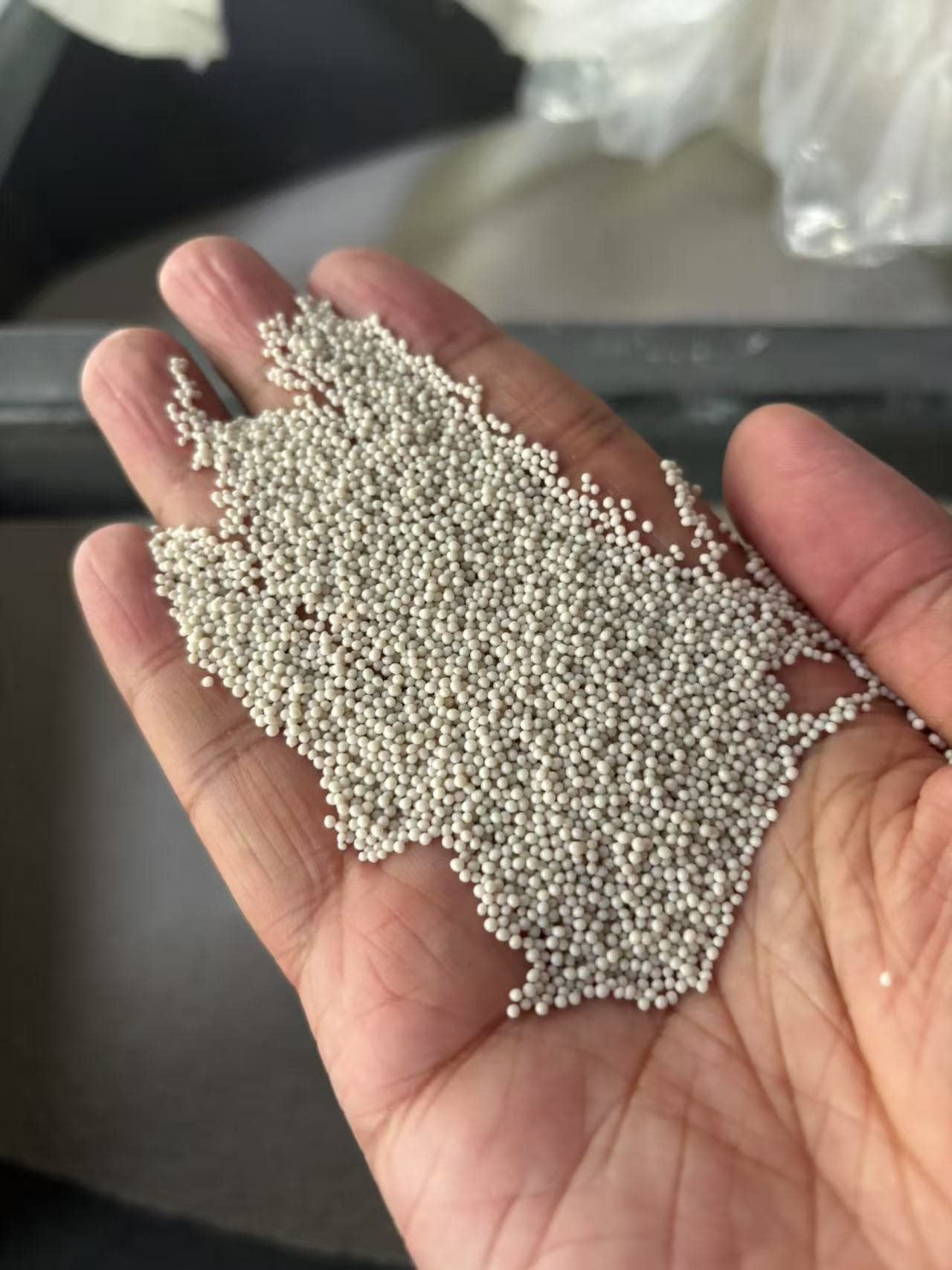
For a bead-moulded packaging component, the material selection should connect bead characteristics to the tool and the finished pack. Do not choose only by the supplier’s general description of expansion performance.
Match the bead specification to the tool
Send the supplier the mould drawing, narrow features, overall dimensions, target density and equipment details. Ask for the intended expansion and conditioning guidance for the selected grade. Obtain the current safety data sheet before planning storage or operation.
Material storage, ventilation and handling should follow the actual product documentation and the site’s safety procedures. Generic internet instructions cannot establish the requirements of an unidentified expandable grade.
Test the complete protective system
A packaging insert does not work alone. Product mass, support points, clearances, the outer carton and the distribution environment all affect performance. A well-formed foam component can still be inappropriate if its geometry allows the packed product to move or concentrates load on a fragile feature.
Use a representative product, or a suitable validated substitute, in the pack trial. Agree the handling and transport tests relevant to the customer’s distribution route. Evaluate fit, visible damage and the product’s required functionality after testing.
Cherein lists R-EPS 303 Expandable Polystyrene Pellets. The listing identifies a product category to discuss; suitability for a particular mould, density or packaging duty requires confirmation rather than an assumption based on the product name.
What Should You Ask Before Ordering a Sample?
A good sample request reduces uncertainty in the material description and makes the trial useful. Send the following information in one brief:
- Finished product, dimensions and intended industrial application.
- Processing route, machine information and current material.
- Required material form: dense pellets, expandable beads or expanded particles.
- Colour, surface, mechanical and dimensional acceptance criteria.
- Any application-specific restrictions or evidence requirements.
- Approximate trial consumption and expected commercial demand.
- Delivery country, receiving address and packaging preference.
Ask the supplier to identify the proposed grade, sample lot and documents that accompany it. A small sample can establish appearance or support preliminary laboratory checks. It may be insufficient for machine purging, process stabilisation and a representative production run.
Discuss sample quantity with the production engineer before requesting the smallest available parcel. Saving on courier cost is unhelpful if the trial ends before the machine reaches a stable operating condition.
Need help identifying the correct material category?
Send Cherein your machine type, finished-product photo and current material description. Our team can discuss an appropriate product category and the information needed for evaluation. Send Your Requirements.
Build a Trial That Separates Material Problems from Process Problems
Record an approved reference run before changing materials. Keep the tool, operator instructions, measurement points and relevant settings documented. Change one important variable at a time where practical, and explain any necessary process adjustments.
Record more than visual appearance
For extrusion, useful observations can include output stability, pressure behaviour, profile dimensions, cut quality and finishing response. For injection moulding, record filling, part weight, cycle behaviour, fit and the relevant functional tests. For bead-moulded EPS, include density, mould filling, fusion observations and packaging performance as applicable.
These are suggested observation categories. Test methods, operating limits and acceptance thresholds must be selected for the actual equipment and application. No single list proves every product suitable.
Keep a sample and a decision record
Retain identifiable material and finished-part samples where practical. Link the trial report to the grade, lot, date, machine and formulation. If additives or masterbatch are used, record their identities and dosing basis as well.
The approval record should state what was accepted and what remains untested. A decorative profile trial does not establish food-contact suitability. A successful short run does not establish a continuous supply agreement. Clear boundaries prevent a useful trial from becoming an unsupported general claim.

Compare Quotations Only After the Material Route Is Clear
Two prices are not comparable if one is for dense recycled extrusion pellets and the other is for expandable beads. First align material identity, grade, quantity, packaging, destination and delivery terms. Then compare the commercial offer.
Ask whether the quoted description appears consistently on the pro forma invoice, material documentation and packing information. Unclear naming can create problems inside the buyer’s organisation even when the supplier understands the intended product.
For recurring purchases, retain an approved specification separate from a promotional product page. The specification should identify the agreed properties, methods, limits and sample reference. A website helps begin the discussion; the purchase documents define the order.
An importer serving several factories should also keep customers’ approvals separate. Acceptance by one extruder or moulding plant does not automatically authorise substitution at another customer’s site.
A Practical Handover Checklist for Distributors
An importer may understand the product correctly while the end customer receives an incomplete description. Prevent that gap by passing on the agreed material form, grade identity, intended processing route and current document revision together. Keep the supplier’s original technical record available alongside any translated summary.
For a hypothetical quotation covering decorative profiles and packaging inserts, create two requirement lines rather than one line labelled “EPS.” The profile customer needs a melt-processing discussion; the packaging customer may need an expandable bead discussion. Combining them because the base polymer is related creates an avoidable substitution risk.
Ask the receiving customer to confirm the material description before a sample is dispatched. Where equipment or product drawings are unavailable, record the unresolved questions and treat the recommendation as provisional. This is especially useful when purchasing, engineering and the overseas distributor communicate through different languages or time zones.
The final handover should also say who approves a substitution. A commercial contact may negotiate price, but the customer’s authorised technical team should decide whether a different feedstock is acceptable for the intended process.
FAQ
Can recycled EPS pellets be used directly in a steam bead-moulding machine?
Not merely because they are called EPS pellets. Confirm whether the supplied grade is an expandable bead feedstock designed for that equipment. Dense pellets recovered from EPS waste are normally discussed for melt processing and should not be treated as an equivalent material.
Are EPS and PS the same material?
EPS belongs to the polystyrene family, but its cellular form or expandable feedstock changes the processing discussion. State whether you need recovered dense PS pellets, expandable beads or already expanded particles. The abbreviation alone does not define an order.
Is HIPS always the best choice when a part breaks?
No. A fracture can reflect geometry, processing, assembly, contamination or the material formulation. Investigate the failure and establish an appropriate test before choosing a different grade. Toughness requirements should be defined at the finished-part level where practical.
Can the same recycled PS grade suit every decorative profile?
No universal grade can be assumed suitable. Cross-section, foaming route, surface decoration, cutting and installation demands differ. Qualify the proposed material against the specific profile and record the approved process and acceptance criteria.
Does recycled material automatically carry food-contact or fire-performance approval?
No. A generic recycled-content or polymer description establishes neither. Request evidence relevant to the selected grade, finished product and destination requirements. If the evidence is unavailable, do not present the material as approved for that application.
What should a distributor provide when asking for a recommendation?
Provide the end customer’s process, product photos, current material, quality targets and estimated demand. If customer details are confidential, remove identifying information while keeping the technical requirements clear. A general request for “the cheapest EPS” is unlikely to produce a useful recommendation.
Conclusion
The correct first step is to identify the production route. Dense recycled PS pellets, recycled HIPS and expandable EPS beads address different processing needs, even when suppliers use similar terminology. Confirm the material form, agree the technical evidence and evaluate the finished product before committing to bulk supply.
Discuss Your Polystyrene Material Requirements
Cherein supplies recycled polystyrene materials for international B2B inquiries. Tell us what you make, how you make it, the current grade and your expected order volume. We can discuss the available product options and the next steps for sample evaluation. Contact Us or email sales1@cherein.com.