
Polystyrene grade comparison
Recycled HIPS vs. GPPS: How to Choose the Right Polystyrene Grade
Compare recycled HIPS and GPPS for impact, transparency, surface finish and processing. Build a documented grade shortlist and plan a representative trial.
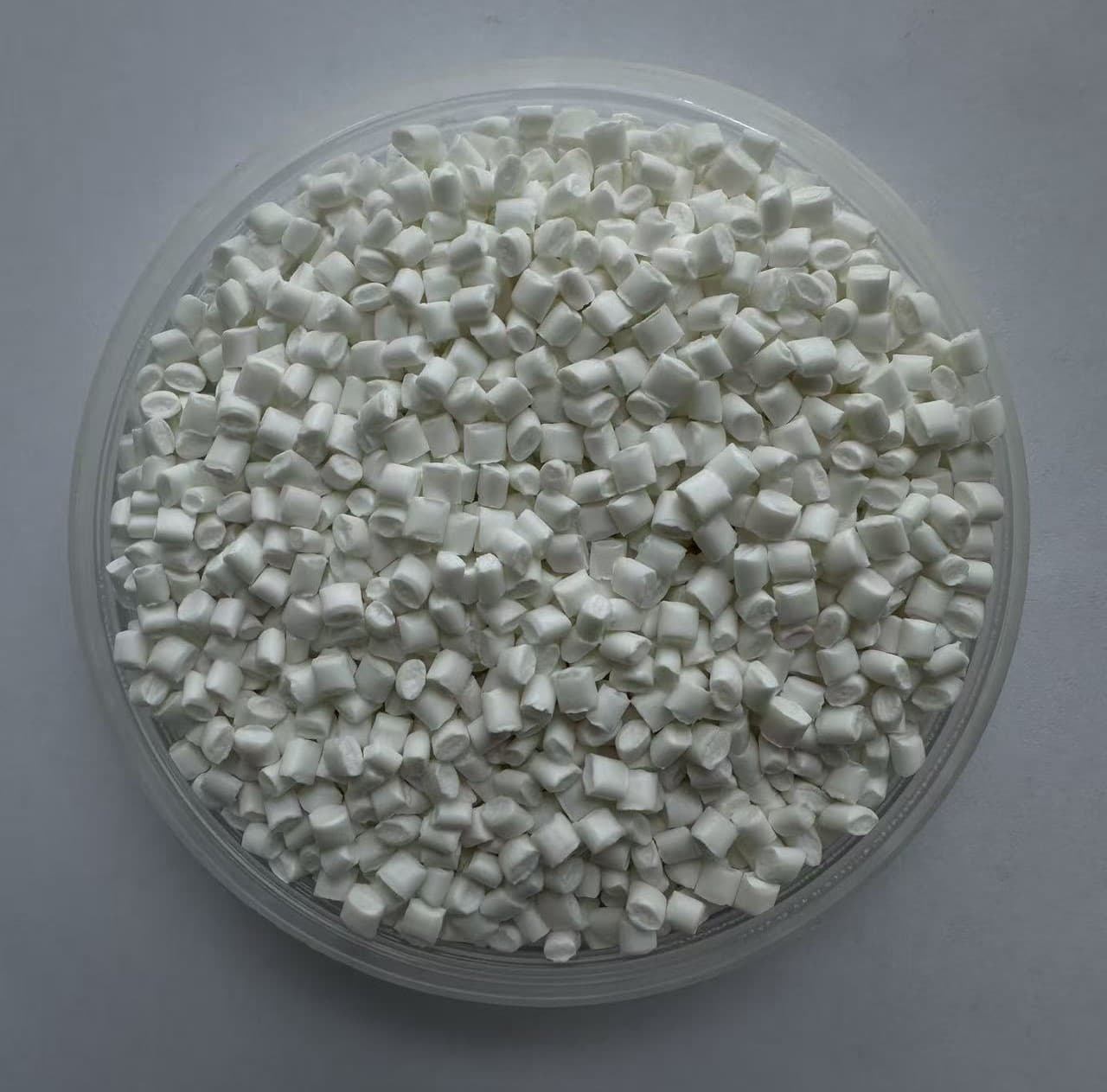
White recycled HIPS pellets from the existing Cherein product library. Appearance alone does not establish impact performance or a GPPS grade.
Which Should a Buyer Choose First: HIPS or GPPS?
Choose a recycled HIPS candidate when impact resistance and an opaque appearance are priorities. Consider a GPPS candidate when transparency and rigidity drive the design. Then qualify the actual grade against the finished product, because recycled content, colour, formulation and processing history can change the result. Neither family name is an acceptance specification.
For an overseas buyer, the useful question is therefore more specific than “Which polystyrene is better?” Ask which documented material can meet the drawing, appearance standard and manufacturing route at an acceptable cost per approved part. A decorative profile, an appliance component and a transparent display piece can require very different approval evidence even if all three are described as polystyrene products.
This guide compares recycled HIPS vs GPPS at the material-selection stage. It does not present GPPS as a confirmed Cherein supply grade. Cherein’s current public range includes white and black recycled HIPS and several recycled EPS pellet options. A transparent recycled EPS product should not be relabelled as a certified GPPS grade without supporting documentation.
What Is the Practical Difference Between HIPS and GPPS?
HIPS is impact-modified polystyrene; GPPS is general-purpose polystyrene. INEOS describes GPPS as transparent and suitable for injection moulding or extrusion, alongside its impact-modified HIPS family. This is a family-level distinction, not proof of the properties of a particular recycled shipment. Source: INEOS polystyrene portfolio.
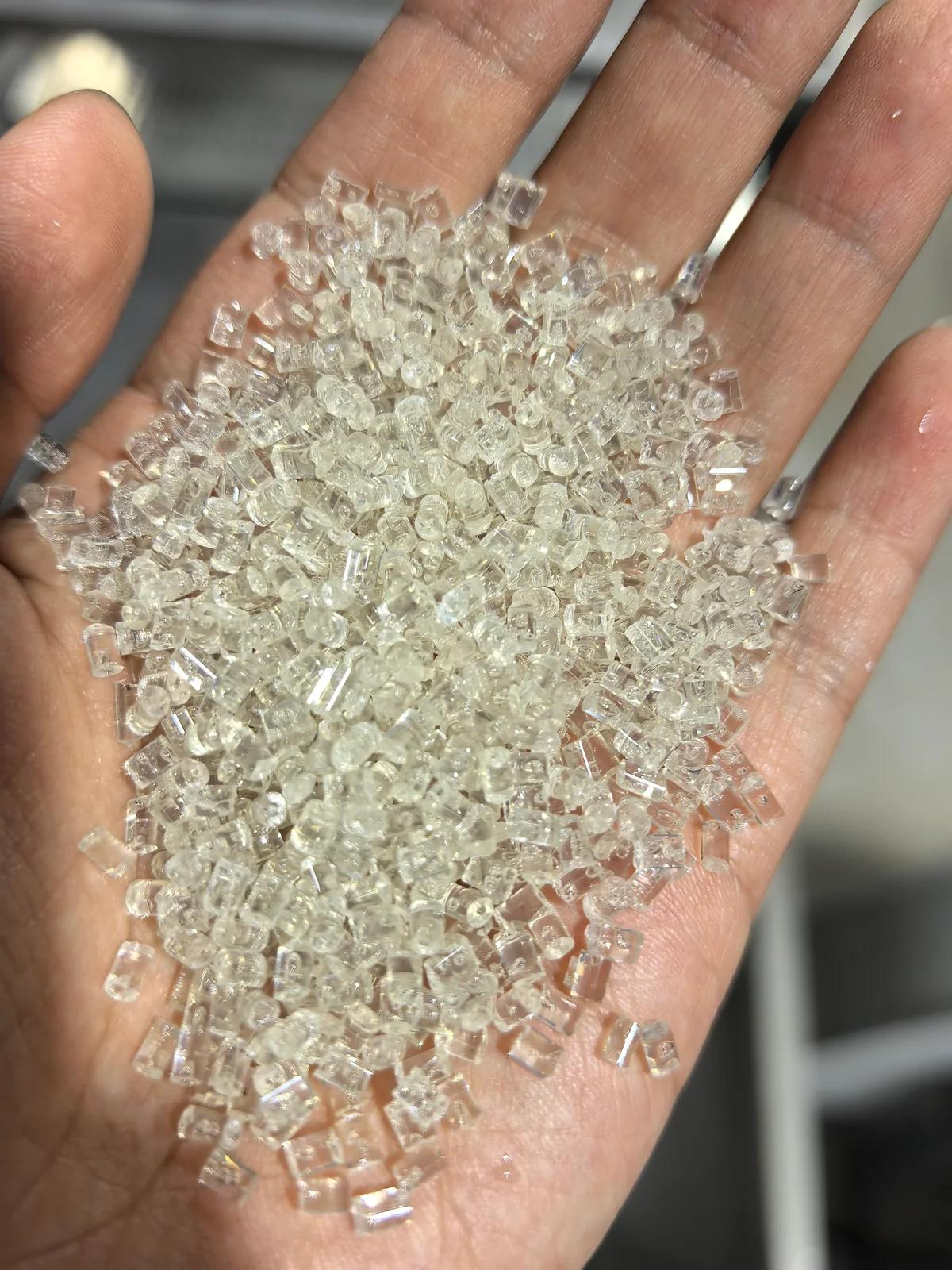
Translate that distinction into a buying brief. If a customer must see clearly through a component, examine transparency on a representative part. If a component must survive handling, assembly or an agreed drop test, examine impact-related performance and the relevant geometry. Do not substitute a photograph of clear pellets or a product name containing “high impact” for either check.
For recycled material, request the supplier’s declared material identity, current grade document and proposed application. Ask how colour and consistency are controlled and which requirements are actually included in the supply specification. These questions help distinguish a usable candidate from an attractive but incomplete quotation.
Does recycled EPS mean expandable foam beads?
Not necessarily. Cherein separates recycled EPS pellets for further processing from R-EPS 303 expandable beads. The intended route must be confirmed before treating them as alternatives. A buyer ordering material for profile extrusion should identify that route explicitly rather than relying on the abbreviation EPS alone.
The existing PS pellets versus expandable EPS beads guide explains that distinction. It is separate from the HIPS versus GPPS decision and helps prevent the wrong type of sample being requested.
How Do the Two Families Compare for a Procurement Brief?
Use a comparison table to define what needs testing, not to award an automatic winner. The following tendencies help structure the enquiry; every shortlisted recycled grade still requires its own evidence.
| Buyer requirement | Recycled HIPS candidate | GPPS candidate | Evidence to request |
|---|---|---|---|
| Transparent appearance | Usually considered for opaque parts; confirm the exact grade | A starting point for clear PS designs; recycled appearance still needs approval | Finished sample at intended thickness and a defined viewing method |
| Handling and impact | Often a starting point when toughness matters | Do not assume an unmodified grade meets an impact requirement | Comparable impact report and relevant finished-part test |
| Rigidity and shape | Check actual stiffness and section behaviour | Check actual stiffness and section behaviour | Appropriate property data and dimensional trial |
| Surface finish | Assess gloss, colour, streaks and texture on the real part | Assess clarity, gloss, colour and visible defects on the real part | Approved reference under consistent lighting |
| Injection moulding | Select for the particular part and documented process suitability | Select for the particular part and documented process suitability | Representative moulding trial and material documentation |
| Profile extrusion | Confirm the formulation and required profile behaviour | Confirm the formulation and required profile behaviour | Stable trial samples, dimensions and finishing checks |
| Regulated end use | Family name does not establish compliance | Family name does not establish compliance | Application- and market-specific documentation |
Keep the last column in the RFQ. Otherwise, a supplier may answer “yes” to a broad application while using a different definition of acceptable appearance or strength. A written test request gives both parties a shared basis for sample approval.
How Should Impact Requirements Influence the Choice?
Start with the failure that matters to the buyer: a broken clip, cracked corner, damaged edge or another defined outcome. Convert that risk into a test on a representative specimen or finished part. Request a HIPS candidate when impact resistance is a central requirement, but approve it only against that requirement.
Describe where the load occurs, how the part is supported and the relevant service conditions. A small laboratory bar and a finished housing do not have the same geometry. Material data can screen candidates; the actual component test checks whether the design and processing route produce the required result.
Can the largest impact number win the comparison?
Only compare results after confirming the method, notch condition, specimen details, conditioning, temperature and units. ASTM D256 is an Izod method, while ISO 179 addresses Charpy testing. Their names describe different test arrangements; an unqualified “impact strength” line is insufficient. Sources: ZwickRoell on ASTM D256, ZwickRoell on ISO 179.
If two suppliers report different methods, ask for comparable evidence rather than inventing a conversion. If the test condition is missing, mark the property “awaiting clarification.” That is a practical purchasing status, not a reason to replace missing information with a guessed threshold.
For assembly-sensitive parts, preserve a control made from the currently approved material. Compare the proposed candidate using the same part drawing and agreed checks. Record any changes to colourant, formulation or process so the reason for a difference can be investigated later.
When Should Transparency or Surface Appearance Decide the Shortlist?
Transparency is an end-product requirement. Judge it at the intended wall thickness, background and viewing conditions. A pellet that looks translucent in a container does not establish how a thick, textured or decorated part will appear. Define the acceptable result before requesting alternatives.
For an opaque HIPS component, colour and surface uniformity may matter more than light transmission. Provide a physical reference where possible, identify visible surfaces, and explain whether the buyer will inspect the undecorated part or the final finish. White, natural and black are broad descriptions, not agreed colour tolerances.
How should decorative products be assessed?
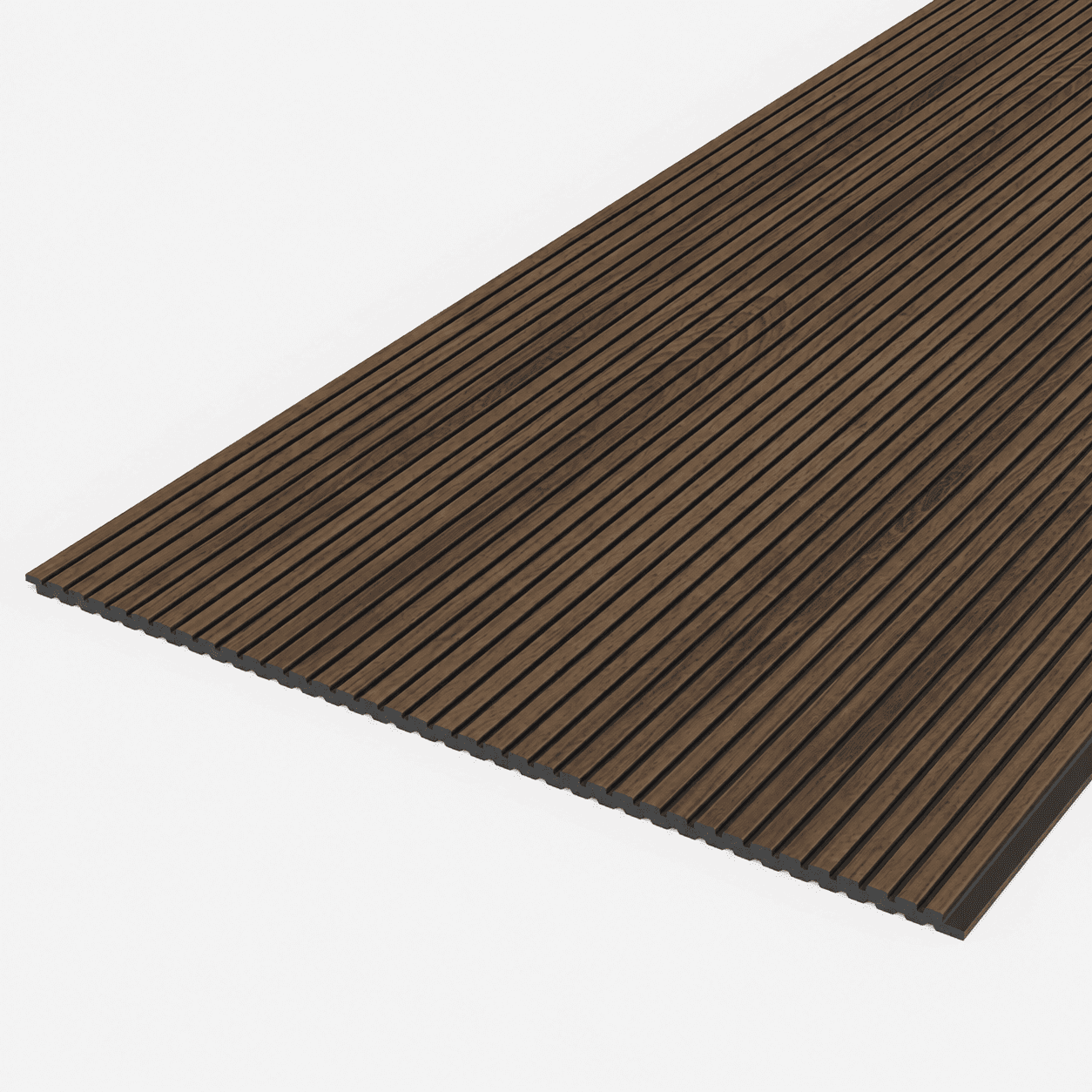
Cherein’s PS skirting guide and grooved wall-panel guide show relevant finished forms. Their material links identify candidates for evaluation; they do not establish a production recipe or the exact resin used in the photographed item.
For a similar project, identify the profile section, visible surface, colour reference and decoration route. Review a representative sample after the intended finishing operation. A material that looks acceptable before finishing may require further evaluation after coating, lamination or another specified operation. Record the actual operation used rather than assuming every profile follows the same route.
Do not infer weathering, flame resistance or building-standard compliance from an interior photograph. Those requirements need their own documentation and testing. Keep appearance approval separate from functional or regulatory approval so a successful colour match does not accidentally approve the entire application.
How Does the Processing Route Change the Material Decision?
Specify the intended process before choosing the sample. Injection moulding and profile extrusion place different demands on the material and tooling. Even within one route, section geometry, formulation and the required finish affect what the trial must demonstrate. A shared polymer family does not make two grades interchangeable.
For injection moulding, share the part drawing, wall thickness, gate-related constraints where available and the current material reference. Use the existing recycled HIPS injection moulding guide for the broader qualification workflow. This comparison does not prescribe machine settings or replace that guide.
For extrusion, provide the section drawing, target dimensions, finishing requirements and the existing formulation when it can be disclosed. Confirm whether foaming or other formulation steps are involved. Ask the supplier to identify which candidate is intended for that route, then evaluate it on the relevant line under an agreed plan.
Why does melt flow not settle the choice?
A melt-flow result is a measurement under specified conditions. ISO 1133-1 covers mass-flow and volume-flow measurements; temperature, load and the reported quantity are essential context. Matching a single flow number does not establish equivalent finished-product behaviour. Source: ISO 1133-1.
Use flow data to screen candidates and investigate consistency, then connect it with trial observations. Keep impact, appearance and dimensional checks in the approval plan. For a detailed review of the document itself, continue to reading a recycled HIPS datasheet.
Which Cherein Products Can Be Discussed Without Overstating the Evidence?
The recycled EPS and HIPS category and the white recycled HIPS and black recycled HIPS pages are existing enquiry routes. They establish the public product names available for discussion. They do not establish that Cherein supplies every GPPS grade mentioned in this comparison.
The current HIPS detail tables publish flow and impact ranges with a general “Batch test” label, but do not provide all the conditions needed for a rigorous comparison. Request the current technical document and clarify the missing method details before transferring those values into an acceptance specification. No new grade-specific performance guarantee is made here.
For a transparent PS application, explain the required optical result and ask which documented material Cherein can propose. The transparent recycled EPS page can start that conversation. Its product name should remain unchanged, and its suitability for the exact requirement must be established by documentation and a sample trial.
How Should an Importer Compare Cost Without Losing the Technical Basis?
Compare quotations only after identifying what each supplier is offering and what approval work remains. A price for an undocumented general-purpose material and a price for an identified HIPS candidate are not automatically competing offers. Confirm the material, sample basis, quoted quantity, packaging and delivery basis before putting the figures into one purchasing table.
Build the commercial comparison around the accepted application. If one candidate needs an additional colour or finishing evaluation, include that work in the decision. If another has not provided comparable impact information, keep the technical status open. Do not attach an invented performance saving to either offer simply to complete a spreadsheet.
For imported supply, ask how the sample, approved material reference and first commercial lot will be linked. Confirm which documentation can accompany the shipment and how a material discrepancy would be reviewed. These are enquiry questions; no fixed MOQ, lead time, price, certification or replacement policy is promised by this article.
A staged decision is often clearer than trying to approve everything at once. First shortlist materials against the product requirements. Next confirm documentation and trial suitability. Then review the sample outcome and commercial proposal together. Keep the record of what was approved so a subsequent request for a cheaper alternative does not silently change the accepted material or formulation.
What Should a Buyer Send Before Requesting Samples?
Send a short application brief that lets the supplier propose a material for a defined test. Include the finished product, manufacturing process, required appearance and key functional risks. Add the current approved grade if available, and separate mandatory requirements from preferences that may be negotiated.
- Finished product and drawing revision, including critical wall or section dimensions.
- Processing route and relevant formulation information that can be shared.
- Whether the part must be transparent, translucent or opaque.
- Physical colour or finish reference and the intended approval method.
- Impact-related requirement, test method and service condition where applicable.
- Available current TDS, specification and a representative approved sample.
- Expected trial quantity, estimated demand and destination for the enquiry.
Use the same brief for each shortlisted supplier. Otherwise, one quotation may describe a decorative extrusion application while another assumes an opaque injection-moulded part. Those proposals cannot be assessed fairly as though they solve the same problem.
How Can the Trial Lead to a Clear Purchasing Decision?
Run an agreed comparison against a control, preserve traceability and record a decision for every critical requirement. The result should be more specific than “machine ran well.” A useful trial report connects the identified grade and lot with the samples the buyer actually approved.
Before the trial
Agree which properties need laboratory confirmation and which require a finished-product check. Define the sample locations, measurement stage and responsible approver. Establish how an inconclusive result will be handled before anyone treats a short demonstration as full material approval.
During and after the trial
Record the material and lot, formulation, machine or line reference, relevant conditions and any adjustment. Retain finished samples for appearance and functional checks. Compare dimensions at the agreed stage and note any downstream operations. Separate observations from conclusions so another person can understand why the material passed, failed or needs another trial.
If the candidate passes only after a formulation change, document that change as part of the approved combination. Do not assume the original unmodified material now has the same approval. For repeat orders, ask how lot identification and agreed documents will link the shipment back to the accepted specification.
Frequently Asked Questions
Is recycled HIPS always better than GPPS?
No. The suitable candidate depends on impact, optical appearance, stiffness, processing and the finished-product requirement. Compare actual documented grades and representative samples rather than choosing by family name alone.
Can I replace GPPS with HIPS when the part must remain transparent?
Do not assume that replacement will preserve transparency. Standard HIPS candidates are generally assessed for opaque applications. Confirm the optical requirement and evaluate a representative sample of any proposed alternative.
Does Cherein’s transparent recycled EPS product prove a GPPS grade is available?
No. The public product name is Transparent EPS Recycled Pellets. Ask for material identification and supporting documentation before classifying it as a particular GPPS grade or approving an optical application.
Is matching MFR enough to approve a replacement resin?
No. Check comparable test conditions, then validate impact-related performance, appearance, dimensions and the intended production process. A matching flow result does not replace a finished-product trial.
Conclusion: Choose Against the Product, Then Approve the Grade
Use impact and transparency to build the first shortlist, then compare documentation and trial results. Keep the product’s acceptance criteria visible throughout the enquiry. The strongest purchasing decision identifies the material, its limits and the evidence supporting approval, rather than simply choosing HIPS or GPPS as a category.
Share your product drawing, current resin and required appearance through Cherein’s enquiry page. Cherein can discuss documented recycled-material candidates for evaluation; availability, specifications and commercial terms should be confirmed for the actual enquiry.