
HIPS datasheet review
How to Read a Recycled HIPS Pellet Datasheet
Read a recycled HIPS datasheet with confidence. Check MFR conditions, impact methods, units, typical values and missing information before comparing grades.
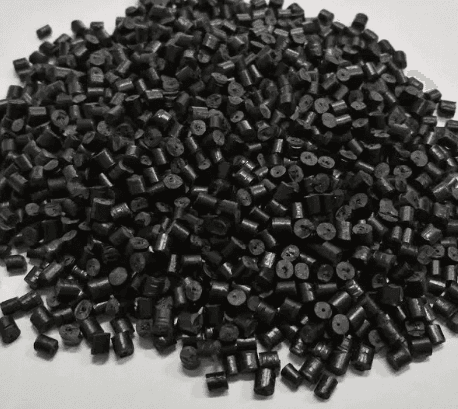
Black recycled HIPS pellets from the Cherein product library. The photograph does not verify any datasheet value.
What Should You Check First on a Recycled HIPS Datasheet?
Read a recycled HIPS pellet datasheet as a documented description of a specific material, not a collection of numbers to rank. Confirm the grade identity and revision, distinguish typical properties from agreed limits, and check methods, units and test conditions before comparing flow or impact results. Then connect the specification to your finished-product trial.
For procurement teams, a datasheet is useful only when it answers a buying question. Can the proposed material be screened for the intended part? Which values can be compared fairly? What remains unknown? Which requirement needs a certificate of analysis, a laboratory report or a production trial rather than another marketing sentence?
This guide focuses on reading the complete HIPS document and building a comparison record. The existing melt-flow and TDS/COA guide explains flow terminology in greater detail. The HIPS injection moulding guide covers the broader application-qualification process. Those remain useful next steps rather than duplicate versions of this article.
Does the Document Identify the Material You Are Actually Buying?
Start with the supplier name, exact grade designation, colour, document date and revision. Check that the sample label and quotation identify the same material. A technically detailed document for a different formulation is not evidence for the pellets arriving at your factory.
Ask whether the sheet describes a standard grade, a customer-specific formulation or a preliminary sample. If the proposed colour or formulation changes, confirm whether the same document still applies. Keep the document attached to the enquiry record so subsequent discussion refers to a known version.
What is the difference between typical data and a specification?
Typical data describe reference performance under the stated conditions. An agreed purchase specification defines the requirements used to accept or reject supplied material. Do not turn a typical value into a guaranteed minimum or maximum without the supplier’s written agreement.
Likewise, a range needs a definition. It may be a published product range, a production-control range or an agreed acceptance interval. Ask which meaning applies and which properties will be reported for each lot. A heading such as “technical parameters” does not resolve that distinction by itself.
How should a COA be linked to the datasheet?
A certificate of analysis should identify the lot to which the reported results apply. Compare its methods and limits with the agreed specification, and check that the lot reference matches the bags and shipping documents. A general datasheet and a batch result serve different purposes; retain both where the purchase agreement calls for them.

How Do You Read the Melt-Flow Line Correctly?
Read the complete line: measured quantity, value or range, units, temperature, load and method. “MFI 7” is incomplete for a rigorous comparison. Ask whether the reported quantity is melt mass-flow rate, MFR, or melt volume-flow rate, MVR, rather than assuming the abbreviation settles the question.
ISO 1133-1 addresses these measurements. MFR is expressed as mass per time and MVR as volume per time; a valid comparison needs the stated measurement conditions. Converting between them requires appropriate melt-density information, not pellet bulk density. Source: ISO 1133-1.
Can two results in g/10 min be compared immediately?
Not if their temperatures, loads or relevant procedures differ. Units are one part of the measurement context. Ask for results under a common agreed condition, or leave the comparison unresolved until the supplier provides clarification. Do not apply an informal multiplier to reconcile different loads or temperatures.
When conditions do match, the result can help screen flow behaviour or monitor consistency within the agreed control system. It still does not describe every condition in an injection unit or extruder. Keep the link to actual part performance rather than choosing the largest number as the best material.
How should the buyer record missing information?
Copy the original wording into a review table, then list the missing field separately. For example, “MFI: published range; temperature and load awaiting confirmation” preserves what is known without pretending the document is complete. Ask one clear question for each gap and record the supplier’s written response.
Why Does Impact Strength Need More Than a Value and Unit?
An impact result is meaningful only with its test arrangement and specimen context. Confirm the method, whether the specimen was notched, specimen dimensions, conditioning, test temperature, units and reported failure behaviour. A line saying “high impact” is a product description, not a comparable test report.
ZwickRoell identifies ASTM D256 with notched Izod testing and ISO 179 with Charpy testing. These are different arrangements, so method names must travel with the result. Sources: ASTM D256 explanation, ISO 179 explanation.
Can J/m and kJ/m² be ranked together?
No simple ranking follows from those labels alone. They use different normalisation bases. Establish the method and specimen information before deciding whether any conversion or comparison is justified. In a procurement review, requesting a common test report is usually more useful than attempting a conversion from incomplete data.
Similarly, do not treat notched and unnotched results as interchangeable. Record “not comparable as supplied” when necessary. That statement protects the integrity of the shortlist; it does not imply that either material is unsuitable.
What if the report says no break?
Ask how the result and failure mode were reported under the applicable procedure. “No break” is not a universal numerical impact value and should not be replaced with an invented number. Keep the original notation, test conditions and specimen details, then decide what additional part testing the application requires.
Which Datasheet Values Can Be Compared Directly?
Only compare like measurements with matching relevant conditions and equivalent definitions. The table below is a document-review checklist, not a set of Cherein guaranteed limits. Its final column turns an ambiguous specification line into a practical supplier question.
| Datasheet item | When comparison is meaningful | When clarification is needed | Buyer action |
|---|---|---|---|
| Material and grade | Same declared family and clearly identified formulation | Grade, colour or formulation differs or is unnamed | Confirm exact identity and applicable revision |
| MFR | Same quantity, units, temperature, load and relevant procedure | Temperature, load, method or quantity is missing | Request the full test condition |
| MVR versus MFR | After confirming the quantities and justified conversion basis | One sheet reports volume and another mass | Ask for results in the agreed form |
| Impact strength | Same method, notch, specimen, temperature and units | Izod versus Charpy, notched versus unnotched, or incomplete details | Request comparable reports |
| Density | Same definition and method | Material density is mixed with pellet bulk density | Establish what was measured |
| Moisture | Same method and reporting basis | Instrument conditions or method are not stated | Confirm the measurement procedure |
| Ash or residue | Same method and reporting basis | A generic cleanliness claim replaces a test | Ask what the result represents |
| Colour and appearance | Agreed reference and viewing method | Only “white”, “natural” or “black” is given | Approve a physical sample and inspection conditions |
| Thermal properties | Same property, method and test configuration | Different thermal tests are presented as equivalents | Identify the property required by the application |
| Compliance | Applicable product, end use and destination are identified | A general logo or unrelated certificate is supplied | Obtain the relevant supporting documentation |
Use this review before inviting suppliers to compete on price alone. A low quotation with unresolved identity or test conditions is not equivalent to a fully documented offer. Resolve the important gaps first, then compare the material on the same purchasing basis.
What Can the Current Cherein HIPS Pages Establish?
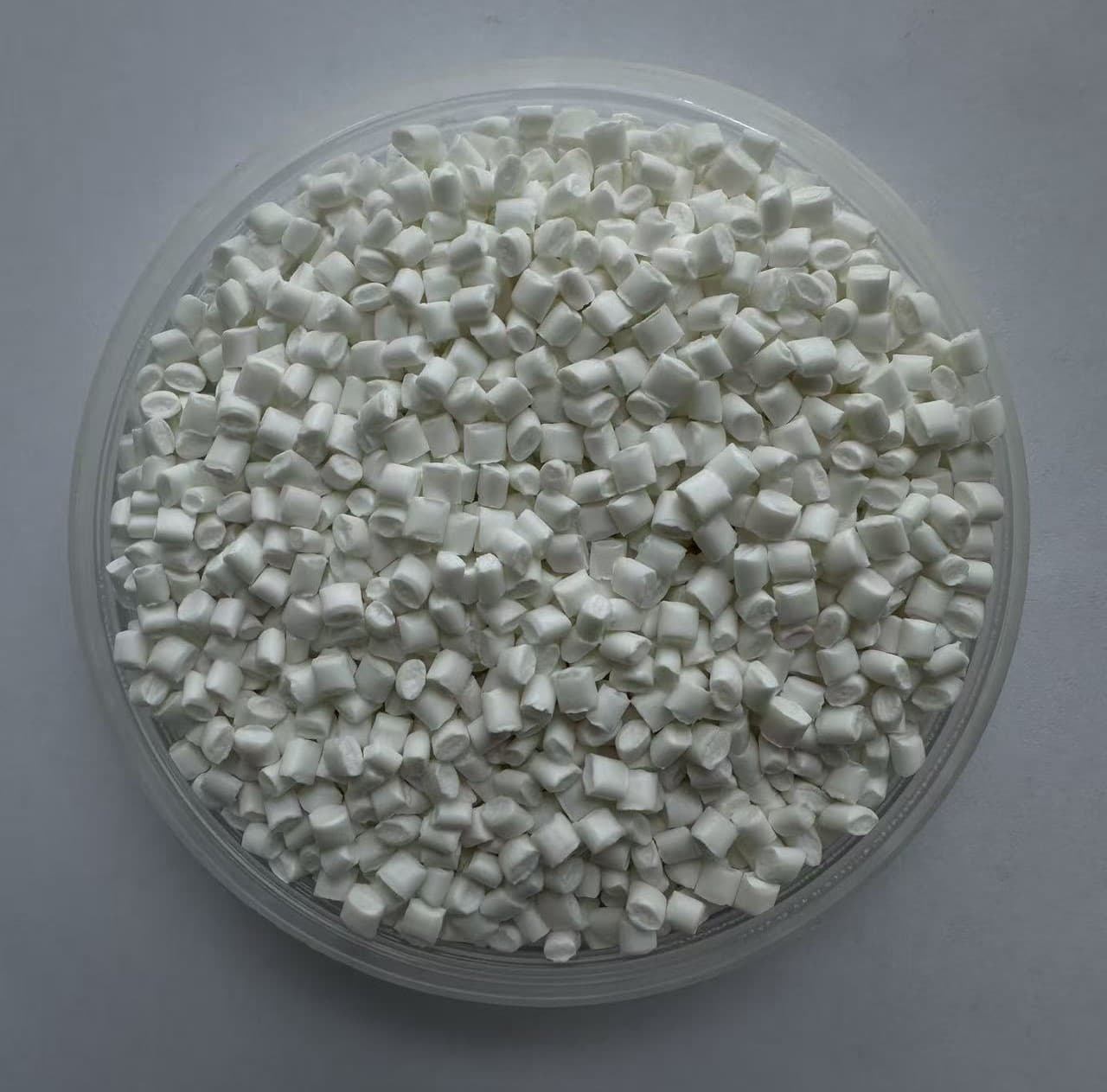
The white recycled HIPS page and black recycled HIPS page identify existing products and provide public reference ranges. They are useful starting points for a technical enquiry, but they are not a substitute for a complete, current grade-specific datasheet and agreed acceptance specification.
The present white-HIPS detail table shows MFI 5–8 g/10 min and impact strength 5–10 kJ/m². The black-HIPS table shows MFI 4–7 g/10 min and impact strength 5–9 kJ/m². Both use a general “Batch test” label. These are transcriptions of the public reference table, not newly verified laboratory results or guarantees.
Which details still need confirmation?
The displayed HIPS flow lines do not state the complete temperature and load condition. The impact lines do not identify the full method and specimen context. Therefore, do not use the apparent overlap between these ranges to declare the products equivalent or rank one as stronger. Request the current documentation for the actual enquiry and lot.
Other rows marked “Available by batch” are information requests, not zero values and not evidence that a property has passed your limit. Ask which results can be supplied with the proposed sample and order. If a property is mandatory for your customer, agree the test and acceptance basis before approval.
No full public HIPS test report was identified for this article. Where the available information is incomplete, the appropriate next step is a datasheet request. The article deliberately avoids creating a fictitious grade code, certificate or completed test report.
How Should a Procurement Team Build a Grade Comparison Sheet?
Keep the supplier’s original data beside the normalised comparison fields. That makes the review auditable and avoids silently losing qualifications such as “typical”, “at 23°C” or “notched”. Assign a status to each critical item: confirmed comparable, awaiting clarification, requires testing, or outside the requirement.
A useful comparison record
- Supplier, grade, colour, revision and sample or lot reference.
- Application, part drawing revision and intended manufacturing route.
- Property name exactly as supplied, numerical value and original unit.
- Method, conditions, specimen details and data status.
- Buyer requirement and whether it is mandatory or preferred.
- Supporting document reference and the person who reviewed it.
- Open question, owner, response date and resolution.
Keep a separate column for trial results. A supplier datasheet value and a factory observation should not be combined into one undocumented “performance” score. They answer different questions and may be based on different samples.
A short illustrative review
Suppose two offers list a flow value and impact value, but one omits conditions and the other provides a complete report. The incomplete offer is not automatically worse material; it is less complete evidence. Ask the first supplier for clarification, mark both against the same requirement, and decide which materials are ready for a trial. This is a review scenario, not a Cherein customer record.
How Do You Connect the Datasheet to Sample Approval?
Use the document to define what the sample needs to demonstrate. Identify the critical properties, confirm how the trial sample relates to future supply, and agree which finished-product checks will decide approval. A successful laboratory comparison alone does not release an unrelated production lot.
For an injection-moulded component, review the actual part’s appearance, dimensions and required functionality using the agreed procedure. For a profile, use a recorded extrusion trial and the required downstream checks. The profile extrusion evaluation guide supplies a trial-record structure rather than machine settings.
Retain the approved material reference, relevant documents and representative finished samples. When purchasing requests another batch, use that record to identify the accepted grade and specification. If the formulation, colour or agreed process changes materially, assess whether the approval remains applicable instead of assuming a historic sample covers everything.
How Should Revisions and Unresolved Fields Be Managed Before an Order?
Keep a controlled copy of the reviewed document and record the supplier’s responses beside it. If a later revision changes a value, method or qualification, review the difference before assuming the original approval still applies. A file with the same product name may contain different information from the version used during sampling.
Avoid filling missing fields with values from another colour, another supplier or a virgin-resin reference. Those documents can help formulate a question, but they do not establish the properties of the proposed recycled grade. Use “not supplied” or “to be confirmed” until the relevant evidence is received.
Assign ownership to the important gaps. Purchasing may collect the document, production may assess processing suitability, and the buyer’s quality contact may decide whether a property meets the customer specification. Record who can close each question so an unanswered technical item does not disappear when the enquiry moves into an order.
The final review should state which document revision was accepted, which sample or lot was evaluated and what remains conditional. Where a supplied value is merely typical, retain that qualification in the purchase review. This gives the team a clearer basis for discussing future batch information without pretending that a generic table was a signed supply specification.
What Questions Should You Send With a Datasheet Request?
Make the request specific enough for the supplier to respond without guessing. State your application and identify the unclear line. Ask for the current document rather than relying on a cropped screenshot forwarded through several conversations. The following wording can be adapted to an actual enquiry.
- Please confirm the exact recycled HIPS grade, colour and current datasheet revision.
- Please identify which properties are typical and which can form an agreed supply specification.
- Please confirm the MFR quantity, units, test method, temperature and load.
- Please provide the impact method, notch condition, specimen details, conditioning and test temperature.
- Please identify the sample lot and explain which batch documents can accompany an order.
- Please advise what additional evidence is available for our stated finished-product requirement.
Do not promise your customer compliance, a fixed rejection rate or a production improvement while those questions remain unresolved. The purpose of the request is to make a sound decision possible, not to create an implied guarantee through email wording.
Frequently Asked Questions
Is a TDS the same as a batch certificate of analysis?
No. A TDS describes the identified material and its stated reference properties. A COA reports information for an identified lot. Confirm which properties and limits are agreed for acceptance rather than treating either document as a universal guarantee.
Can I compare two MFR values if both use g/10 min?
Only after checking temperature, load, method and relevant procedure. Matching units alone do not establish matching test conditions. Request a result under the agreed condition when details differ or are missing.
Can I compare Charpy and Izod impact values directly?
Do not rank them as equivalent measurements. Confirm the method, notch, specimen, conditioning, temperature and units, and request comparable evidence for the application.
Are Cherein’s published HIPS ranges a complete acceptance specification?
No complete grade-specific acceptance document is established by the public table alone. Request current documentation and clarify the missing test conditions before agreeing material limits or approving a sample.
Conclusion: Make the Numbers Traceable Before Comparing Them
A useful datasheet review establishes identity, meaning and comparability before it draws a conclusion. Record missing conditions, keep typical data separate from agreed limits, and connect the document to a representative trial. That approach gives purchasing and production a shared basis for discussing an alternative grade.
Request current HIPS documentation from Cherein with your application, existing specification and the properties you need to verify. Available data and supporting records should be confirmed for the specific material being proposed.