
Industrial applications
What Are Recycled Polystyrene Pellets Used For?
See where recycled polystyrene pellets fit in PS skirting, wall panels, frames, XPS boards and moulded HIPS parts, and what to verify in a trial.
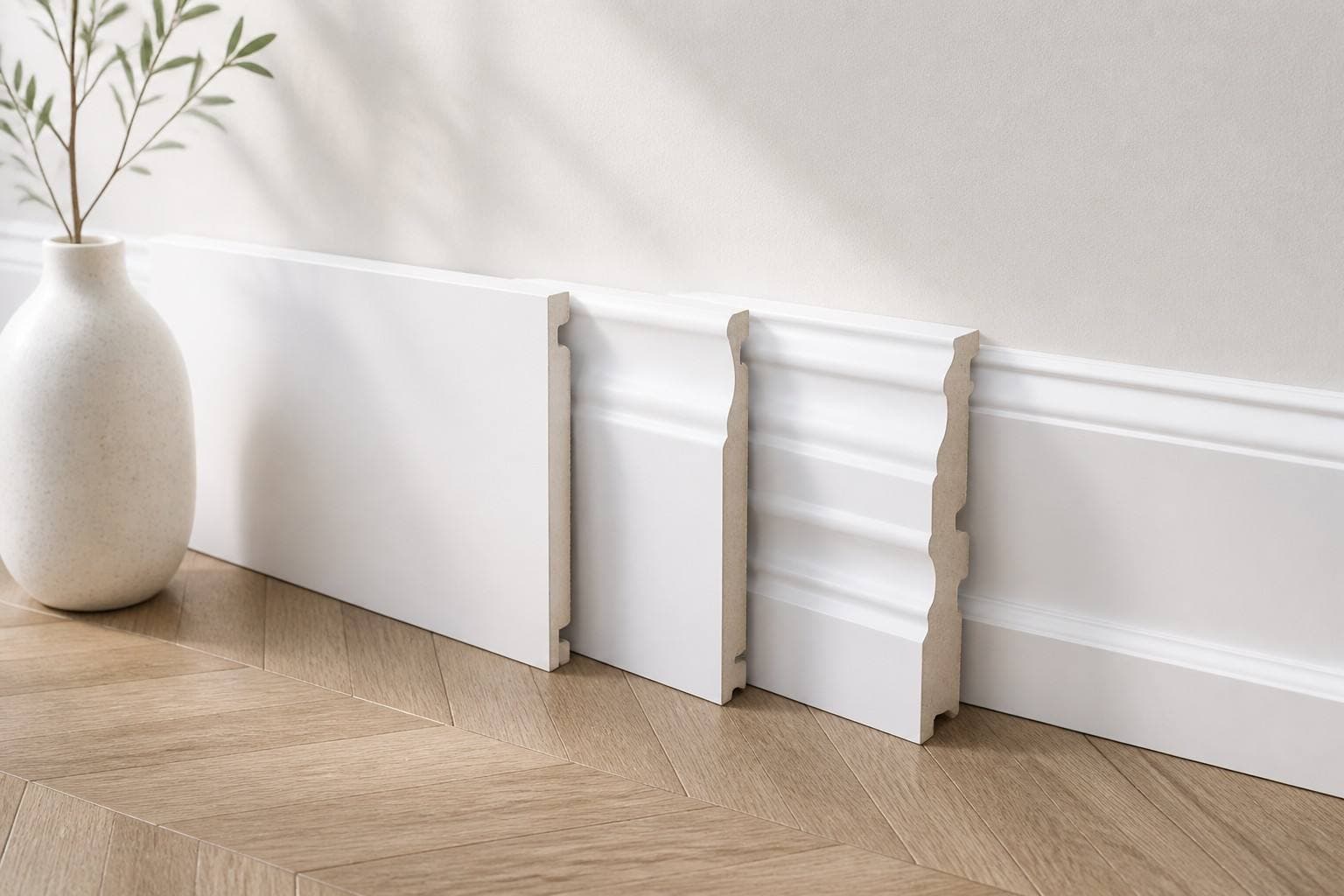
PS skirting profiles and an installed wall-to-floor detail from Cherein’s application guide.
Introduction
Recycled polystyrene pellets can be used to make extruded PS skirting boards, decorative wall panels and picture-frame mouldings. Suitable recycled PS feedstock can also be evaluated for extruded polystyrene (XPS) insulation boards, while selected recycled HIPS injection grades are candidates for housings, racks and appliance components. Choose the pellet by the manufacturing process and finished-product requirements, then confirm the proposed grade on the intended line.
For a buyer, the practical question is whether a particular lot of pellets can make a part your factory can repeatedly ship. A light skirting board needs an acceptable visible surface and a clean joint. An XPS board needs evidence for its declared insulation performance. An injection-moulded housing needs the required fit and impact behaviour. Those are three different acceptance decisions even when all three are described as polystyrene products.
Which Polystyrene Material Does Your Process Need?
Start by identifying the operation that consumes the resin. Reprocessed EPS pellets are melt-processable PS feedstock recovered from EPS. Product listings sometimes shorten that description to recycled EPS. Recycled HIPS is high-impact polystyrene sold in grades for specific processes. Expandable EPS beads are supplied for a route that uses bead expansion and moulding. Confirm the product form explicitly when requesting a sample, especially when the RFQ also uses the word “foam.”
| Finished product | Process to discuss | Evidence to request before material approval |
|---|---|---|
| PS skirting board | Profile extrusion and the intended surface finishing sequence | Drawing, stable section dimensions, cut-joint appearance and an approved colour sample |
| Decorative PS wall panel | Panel or profile extrusion with a separately specified decorative finish | Panel width, groove definition, interlock fit, straightness and an assembled finish sample |
| PS picture-frame moulding | Profile extrusion, cutting, joining and the intended decoration | Section drawing, completed mitre corner and finish acceptance |
| XPS insulation board | Continuous extrusion foaming on the intended board line | Board thickness and density, trial records and testing for declared finished-board performance |
| HIPS appliance component or housing | Injection moulding with a grade evaluated for the actual part | Current resin, wall thickness, flow and impact evidence, assembly and part test results |
The Recycled EPS & HIPS category is the starting point for Cherein grades. Its product pages and application guides identify options to screen. A picture of a finished profile cannot establish the resin grade, recycled fraction, colourant, foaming system or supplier of the pictured product. Use the photos to communicate the geometry or appearance and use samples and documents to establish the material.
How Are Recycled Pellets Used in PS Skirting Boards?
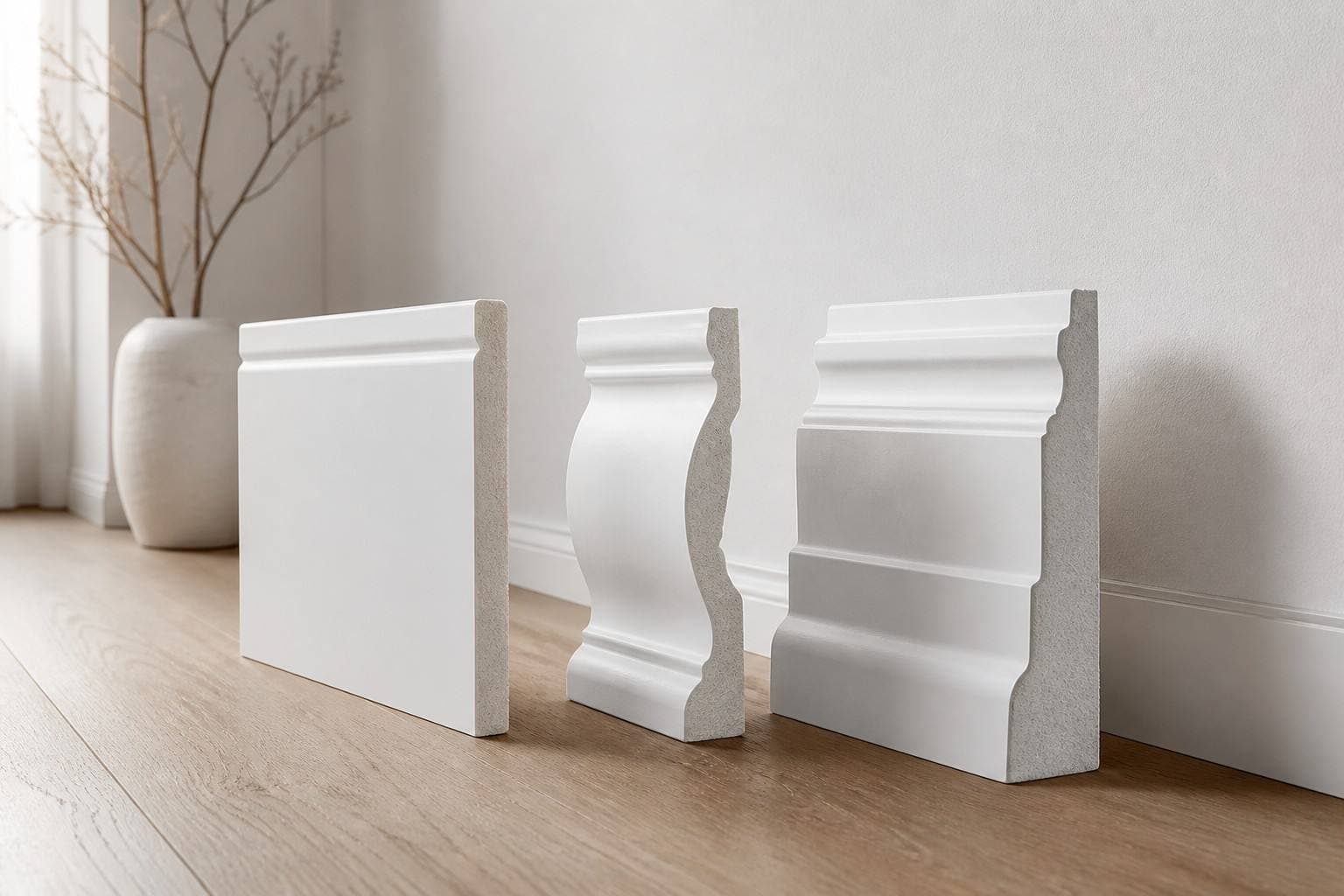
Skirting boards are profiles fitted along the wall-to-floor junction. The PS skirting board application guide shows flat, curved and stepped white profiles. A typical manufacturing discussion starts with profile extrusion and ends with the finished, cut trim. Cherein associates Transparent EPS Recycled Pellets, Grade B1 and Grade C with skirting or related decorative profiles. The appropriate candidate depends on the formulation and surface requirement.
What should a skirting-board buyer send before sampling?
Send a cross-section drawing with critical dimensions, the expected finish, an approved colour piece and a description of the extrusion and finishing steps. Indicate whether the visible face is the same material as the core or is covered by a surface treatment. A buyer evaluating a white profile should record which surfaces will remain visible after cutting, including any mitre, exposed end or reveal. If a supplier sees only a finished face photograph, an important colour requirement at the edge can be missed.
Check the resulting profile after it has cooled. Measure width and critical lips, inspect flatness or bow over the relevant length, and cut and fit representative pieces. For an interior kit with matching accessories, compare the trim and accessories together under the intended lighting. Include a basic handling check at the packing length your team actually ships. A profile that looks good as a short sample may be difficult to handle or assemble at sale length.
How Are Recycled Pellets Used in Decorative PS Wall Panels?
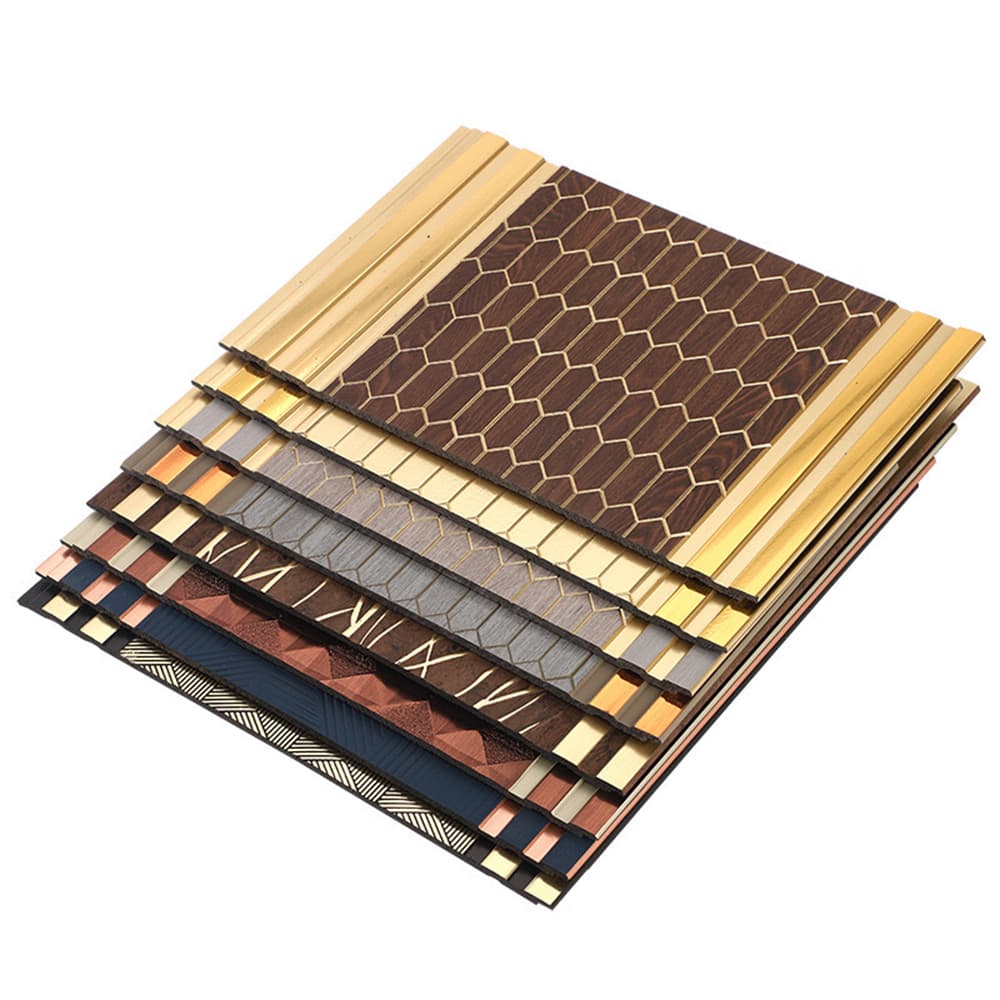
Decorative PS wall panels use flat, grooved or patterned sections to create a repeated visible surface. For an extruded panel design, the buyer needs a stable section and a finish that works across adjacent pieces. The grooved wall-panel guide and decorative wall-panel guide illustrate these two considerations. Cherein links its Transparent, B1 and B2 recycled EPS grades to wall panels or decorative profile applications for sample evaluation.
What separates a material trial from a finish trial?
In the material trial, check whether the proposed compound runs on the equipment with acceptable output, section dimensions and handling. Record the grade, batch, current formulation, tool, line settings and the period after the line stabilised. In the finish trial, check the selected decorative process on the resulting substrate. Depending on the planned product, your team may need to assess how the coating, film or other surface treatment looks at joints and corners. Confirm that process from drawings or production records before assuming how a pictured panel was made.
Set up several adjacent panels when approving the appearance. Look across the assembled surface under the expected lighting and inspect it from a shallow angle. A narrow variation in width or groove position can accumulate across an installation. A shade difference that is hard to see on a loose panel can become obvious when two pieces meet. Keep a reference panel and define whether the approved match is to a single sample or to an allowed range.
For a hollow or ribbed panel, share the critical edges and mating geometry along with the nominal overall width. Ask the line team to check both the outside dimensions and the features that engage the next panel. If the section uses a separate decorative layer, inspect it after normal cutting and assembly. Record where a defect occurs and whether it appeared before or after finishing. This gives the supplier a clearer basis for discussing the base resin, the proposed formulation or the finishing step.
Where Do Picture-Frame Profiles Fit?
PS picture-frame mouldings are shaped profiles with a decorative face. They are cut and joined to form a frame. The picture-frame moulding guide shows dark, wood-look and ornamented designs. Cherein lists Transparent, B1 and B2 recycled EPS grades for picture-frame uses. Its product data also identifies Grade C for dark frame cores. Use those listings to choose samples to compare on the intended extrusion and finishing route.
Evaluate a full corner sample. The mitre exposes the edge of the profile and makes the relationship between core colour and decoration visible. Look for chipping at the cut, poor alignment where two faces meet and changes in the appearance of the decoration around the corner. If the design has a lip or channel, bring the actual backing, insert or glazing part to the trial. Fit can matter as much as the appearance of the straight section.
A light core may be worth evaluating where cuts or edges remain visible. A darker core can be a reasonable candidate where the colour and finish have been approved for that combination. Record the exact finished sample and grade together. If the next order uses the same decoration with a different core, repeat the cut and assembly checks before approving the substitution.
Can Recycled Polystyrene Feedstock Be Used for XPS Boards?
Yes, suitable feedstock can be evaluated within an XPS formulation and on an XPS extrusion line. XPS stands for extruded polystyrene. The XPS insulation board guide describes continuous extrusion foaming and identifies Transparent EPS and Grade B1 as materials to discuss. Cherein’s catalogue lists XPS boards as an application for Transparent EPS, and its product information associates B1 with this application.
Ask what the buyer’s line is already designed to run. Send the current resin specification, proposed recycled share or blending plan, target board thickness, required density and intended application. Record surface condition and cell appearance at agreed points across the board and check thickness and density over the run. If the end market requires evidence for thermal performance, compressive properties or another declared characteristic, test the actual board under the relevant method.
A resin datasheet can help screen the incoming pellet. Performance claims for insulation apply to the finished board tested for the relevant application. A promising trial on an interior trim line provides little information about board dimensions, density variation or finished insulation performance. Give the board team its own release decision with its own test record.
When Should a Factory Evaluate Recycled HIPS?
Evaluate a recycled HIPS injection grade when the part is injection moulded and needs a practical balance of filling, dimensional fit and impact behaviour. Cherein lists White Recycled HIPS and Black Recycled HIPS injection grades for applications such as appliance components, casings and racks. Review suitability for the specific part, especially where a fastener, snap fit or thin corner concentrates stress.
Send the part drawing or a sample, the current resin, wall thickness, colour requirement and the acceptance tests used by your customer. Request the test method, units and conditions behind any flow and impact data. Then inspect actual trial parts for filling, visible surface defects, dimensional fit and performance after assembly. Test thin features and the points where a housing may be dropped, assembled or repeatedly handled. Use the HIPS injection moulding guide for a more detailed trial checklist.
What Should a Buyer Put in an Application Sample Request?
A useful request lets the supplier match a product candidate to an existing manufacturing job. Include an image or drawing that distinguishes the shape from the decorative finish. Give the resin currently used and attach its specification if you can share it. State whether you are replacing the full resin feed, evaluating a blend or still establishing the baseline. Identify the plant equipment and the finished product’s market where those details affect qualification.
Separate mandatory acceptance criteria from preferences. If a skirting board must meet a joint fit tolerance, list that value and the measurement method. If shade is judged against a physical master, send the reference and the lighting conditions instead of asking for an undefined “good white.” Mark any information you do not yet know, such as a supplier’s final grade code or the sample amount needed to reach stable production. That gives the supplier a precise set of questions to answer.
How can the factory capture a useful comparison?
Use a control made with the current material, where available. Label the control and the trial with the resin grade, lot, tool and date. Compare equivalent points in a stable run rather than a startup sample on one side and regular production on the other. Save the readings that explain the decision, including the dimensions checked and the appearance or handling observations that made a difference.
At handover, leave purchasing with a short written summary of the approved grade, acceptable ranges, unfinished tests and the person responsible for release. This helps a distributor order the right grade for a customer, and it lets a receiving team match the eventual shipment to the approved specification.
What if two customers request similar-looking products?
Give each application its own release criteria when the sections, processing routes or customer tests differ. A wall-panel buyer may care most about repeated groove alignment across an installed row. A picture-frame buyer may reject the same base shade if it shows at an exposed mitre. A distributor can use one internal grade code for orders that genuinely share an approved material, but the link to each customer’s acceptance record still matters. Keep distinct references if the same material is sold into two different finishes.
If a buyer is moving from a virgin grade or changing from one recycled source to another, ask which part attributes were previously signed off. Avoid treating an acceptable first sample as permission to change the recipe or mix lots. Define the next decision in terms the team can record, such as checking the fit of cooled sections from the beginning and end of a stable run, or confirming a colour against an approved assembled sample.
FAQ
Can recycled PS pellets be used for both wall panels and skirting boards?
Yes, selected recycled PS grades can be evaluated for extruded panels and skirting profiles. Qualify the section, surface finish, colour, cutting and fit on the intended line. Approval for one product does not automatically cover another geometry or finish.
Is recycled EPS pellet feedstock the same as expandable EPS beads?
No. Reprocessed EPS pellets are melt-processable feedstock for suitable processes. Expandable beads are specified for a bead expansion and moulding route. Confirm the material form, process and current product specification before sampling.
Can I identify the pellet grade by looking at the finished panel?
No. Appearance can describe a finish or cross-section. Confirm the resin identity and lot from product and batch documents, then check whether the proposed material can reproduce the required performance on your line.
Why does actual polystyrene recycling depend on local facilities?
Local collection rules and available processors determine which forms are accepted. Foam and rigid PS can have different routes. In the United States, check the local program or drop-off operator for the specific item. See the U.S. EPA recycling guidance below.
The U.S. EPA’s guidance on common recyclables explains that few curbside programs accept polystyrene foam and that local drop-off options vary. Treat local collection as a separate question from whether an industrial buyer can use reprocessed pellet feedstock.
Conclusion
Use the finished part to select a grade family. Choose an extrusion candidate for PS trim or panels, a separate board-line evaluation for XPS, or an injection-grade HIPS candidate for an impact-sensitive moulded part. Take the drawing, resin specification and acceptance sample into the same trial so that purchasing and production approve the same material.
If your team is ready to compare grades, read how to choose recycled EPS pellets. If you already have a qualified part and need to prepare an order, use the bulk recycled polystyrene purchasing guide. For an application discussion, send Cherein your drawing or reference sample, process, target finish and expected volume.